


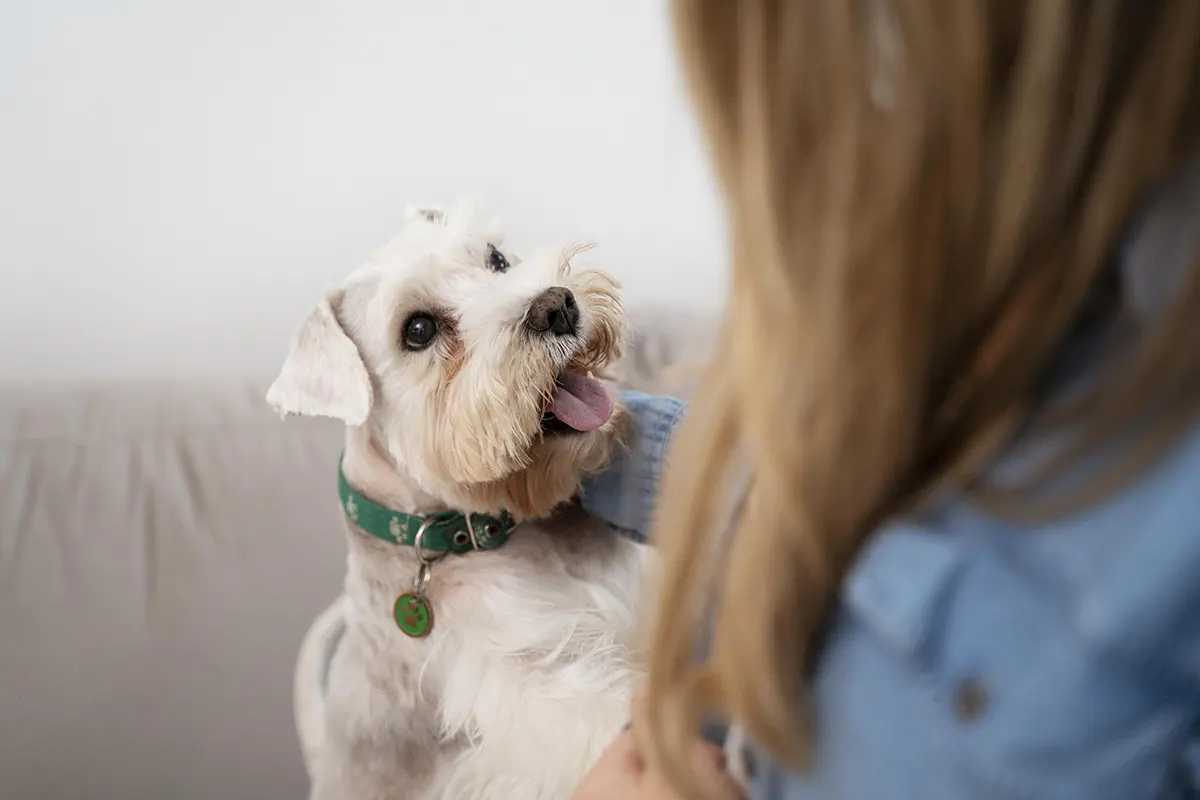
Fun facts about dogs
Hello again, friend! Here we'll share some fun facts about dogs that you may not usually know.
- Fun facts about your canine friend
- Their body language is essential
- Do dogs see differently from other animals?
- Dogs have an outstanding memory
The goal is for you to learn or know much more about your dog. Dogs have become our life companions and a fundamental part of our family, and just as each of us has something essential that defines us, so do they. We'll show you some fun facts about our furry friend so you can broaden your knowledge about them.
There are things you may not know well about your canine, so this time we'll show you some fun facts about dogs that will help you learn more about them and how they get along in the environment we live in every day.
Their body language is essential
Unlike us, they communicate through signals to interact with us. What's special about canines, and we're talking about all breeds, is that they will never fake their emotions and will always try to let you know what's going on with them.
If you want to know what your dog needs or wants, you need to learn to read its body language, which can be classified or identified in different parts of its body, such as its posture, tail, eyes, ears and face. Below, we'll go over each of them and what each movement or gesture is trying to tell you or make you understand.
TAIL position or movement
This is one of the easiest channels of communication for identifying what they want to tell us.
Low with strong wagging:
– Wants to play.
– Feels excited.
– Knows you're the one in charge.
Low with slight wagging:
– Paying attention to what you tell it
Raised and stiff:
– Challenging.
– Asserting authority.
Tucked between the legs:
– Is afraid.
– Is scared.
– Uncomfortable.
– Is feeling unwell.
Communication with the EYES
This channel of communication is a bit harder to read, although it's one of the main ways your dog tries to communicate with you.
Wide open and staring:
– Seeking attention
– Challenging
Half-closed or winking:
– Wants to play
EAR movement
Ears are a somewhat subtler sign, and it will definitely take more time to work out what your dog is trying to say, since every dog uses this channel of communication differently.
Lowered or flattened against the head:
– Scared.
– Distrustful.
Lowering only one ear:
– Is in an unfamiliar environment.
– Is afraid of a person or thing.
FACIAL gestures
One of the most common gestures you'll see is yawning. Most people think their dog is tired or feeling unwell, and that's usually the case, but here we should also take into account the environment or place where the dog is making this gesture, since what it's communicating may depend on it.
Yawning in new environments or around other dogs:
– Nervousness.
Licking its face or nose:
– Cleaning itself.
– Stressed.
– Under pressure.
Showing its teeth:
– Marking territory.
– Warning you not to come closer.
Do dogs see differently from other animals?
Until relatively recently, it was thought that dogs could only see in black and white, but today we know that these canines can see certain colors and even tell them apart without any problem.
How do dogs see?
Canine vision plays a very important role in these animals' lives when it comes to meeting their basic needs. Dogs have dichromatic vision, which makes them more sensitive to blue and yellow. This doesn't mean their vision is poor compared to ours as humans; in fact, our best friends are excellent night hunters, with superior visual acuity and a perception of movement that is much more sensitive than ours. So what colors do dogs see?
Studies show that dogs can easily see different shades of blue, yellow and gray. It's also important to mention the colors they can't distinguish: purple, red, pink and green.
That's why, when buying toys for your dog, we recommend choosing blue or yellow, since those are the colors they can distinguish and will find easier to identify during fetch or discrimination exercises.
A fun fact we'd like to add: these lovely little friends can also suffer from nearsightedness or farsightedness, just like us humans. It has been found to occur particularly in certain breeds such as the German Shepherd and the Rottweiler.
Dogs have an outstanding memory
Dogs have a different memory from humans' episodic memory, which is tied to autobiographical events such as moments, places, associated emotions and other contextual knowledge; they use another type of memory. Despite this difference, these lovely dogs have an excellent memory. In this article we'll explain how a dog's memory works and why they can remember certain things and not others.
How does your dog's memory work?
According to the results obtained over time, a dog's memory works in 5 ways, which we explain below:
Procedural memory:
Dogs use this type of memory from the very beginning of their life cycle. It lets them store the information we teach them, such as going out to the yard to relieve themselves, bedtime or mealtime. Procedural memory improves as the dog repeats these daily actions, which is why trainers rely on repetition when training a dog. This memory becomes deeply imprinted in your pet's brain, so that in the future it uses it almost unconsciously.
Associative memory:
As the name suggests, this type of memory works by associating things with something in particular; in dogs, it works by associating them with food. Dogs learn anything related to food much faster: for example, if you teach them that giving you their paw earns a reward, they'll learn it easily. Associating movements or actions with food is the fastest way for these pets to memorize, because associative memory is the best way for them to learn.
Short- and long-term memory:
Dogs have long-term memory that lets them remember the training and obedience exercises we taught them as puppies, and they also have short-term memory. The difference is that their brain doesn't work like ours: for example, we can remember leaving home on a sunny day, jogging to the park, tripping over a rock and getting hurt, while a dog in the same situation will only remember that falling hurts. On the other hand, their short-term memory is very selective: they remember what's important, not the details. If a person mistreats a dog, it will quickly memorize that this person is bad, and the same happens if a person gives it a treat: every time it sees them, it will easily remember.
Olfactory memory:
Now let's talk about their extraordinary olfactory memory. Their brain can associate smells with different places and even with different situations. Needless to say, a dog's nose is a thousand times better than a human's. Their sense of smell is so amazing that a dog's brain creates and memorizes a scent map of everything, for example of its home, even of places it visits only once and doesn't return to for many years. Maybe your dog has met a new person and its first reaction was to bark nonstop and not let them touch it. This happens because that person probably has a smell that signals something negative to the dog, activating its associative memory, which identified it as something bad.