Okvet logo
Okvet Veterinary Software

Artificial intelligence in veterinary medicine

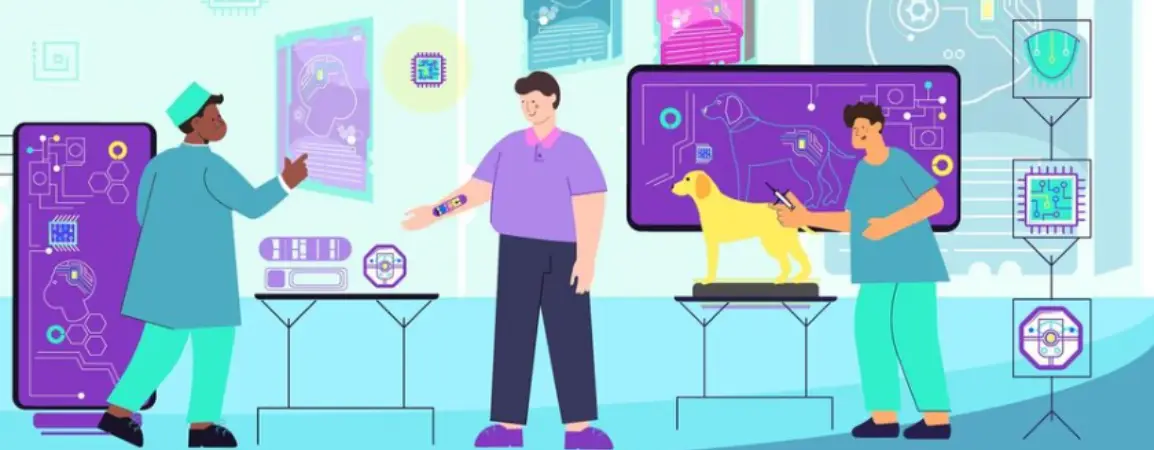
AI in veterinary medicine refers to the use of advanced algorithms and computer systems to analyze clinical data, diagnostic images and animal behavior, in order to support professionals in making medical and administrative decisions. This ranges from diagnosing diseases to personalizing treatments and improving operational efficiency in veterinary clinics.

Applications of AI in veterinary medicine

veterinary AI makes it possible to detect conditions faster and more accurately through automated X-rays, ultrasounds and lab tests. It also enables remote monitoring, disease prediction and personalized treatments, improving medical care and reducing response times. AI applications in veterinary clinics also streamline administrative management, digital medical records and data-driven clinical decision-making, positioning AI as a key tool for the future of animal health.

3 Practical applications

1. AI-assisted diagnosis

AI has proven especially useful in interpreting medical images such as X-rays and ultrasounds. Deep learning-based systems can detect abnormalities with accuracy comparable to that of human experts, enabling faster and more accurate diagnoses.

2. Personalized medicine

Tools like FidoCure use AI to analyze pets' genomic data, making it possible to develop personalized treatments, especially in cases of canine cancer. This significantly improves therapeutic success rates.

3. Automation of administrative tasks

AI is also used to automate administrative tasks, such as transcribing clinical notes and managing appointments. This frees up time so veterinarians can focus on direct patient care.

Benefits of AI in veterinary practice

  • Improved efficiency: Less time needed for diagnoses and administrative tasks.
  • Diagnostic accuracy: Greater precision in interpreting clinical data and images.
  • Personalized care: Treatments tailored to the specific needs of each animal.
  • Fewer errors: Minimized human error in diagnoses and treatments.
  • Better client experience: Faster, more accurate answers to pet owners' questions.

Challenges and ethical considerations

Despite its benefits, implementing AI in veterinary medicine presents challenges

  • Data privacy: Protecting patients' clinical information is essential.
  • Technological dependence: Avoid excessive dependence that could diminish human clinical judgment.
  • Implementation costs: Adopting advanced technologies may require significant investment.
  • Professional training: Ongoing training is needed for veterinarians to stay up to date with new tools.

Leading AI tools for veterinarians

  • FidoCure: Personalized oncology platform for dogs.
  • VetScan Imagyst: Diagnostic image interpretation system.
  • ScribbleVet: Automatic clinical note transcription tool.
  • Miauv: Virtual assistant that helps with diagnoses and treatment suggestions.

Conclusion

The integration of artificial intelligence into veterinary medicine represents a significant evolution in the way animal care is delivered. By combining clinical experience with the analytical capabilities of AI, veterinarians can offer more accurate diagnoses, personalized treatments and more efficient care. However, it is crucial to address the associated ethical and practical challenges to ensure responsible and effective implementation.

Frequently asked questions

Will AI replace veterinarians?

No, AI is designed to complement veterinarians' work, providing tools that improve accuracy and efficiency, but it does not replace human clinical judgment.

Yes, as long as appropriate security and privacy protocols are in place to protect patient data.

It requires investment in technology, staff training and adapting clinical processes to integrate the new tools effectively.

No, AI is also applied in veterinary medicine for livestock, horses and wildlife, improving health and welfare in a variety of settings.

There are numerous online resources, including courses, seminars and specialized publications covering the application of AI in veterinary medicine.

“ Caring for animals isn't just a science; it's an act of humanity that transforms the world through empathy. “

Data Provided by Okvet

The information in this article was provided by Okvet, veterinary software specialized in the management and control of veterinary clinics. Okvet helps industry professionals optimize their clinical performance and efficiently manage patient care, improving service quality and pet owner satisfaction.

  • Intuitive, easy-to-use interface: Makes adoption and daily use easy for the entire staff.

  • Complete patient management: From medical histories to vaccine reminders.

We have other options for you

Subscribe and start
getting news about OkVet 🙂